
How to Choose Swimwear After a Mastectomy, Whether You Go Flat, Reconstruct or Wear a Prosthesis
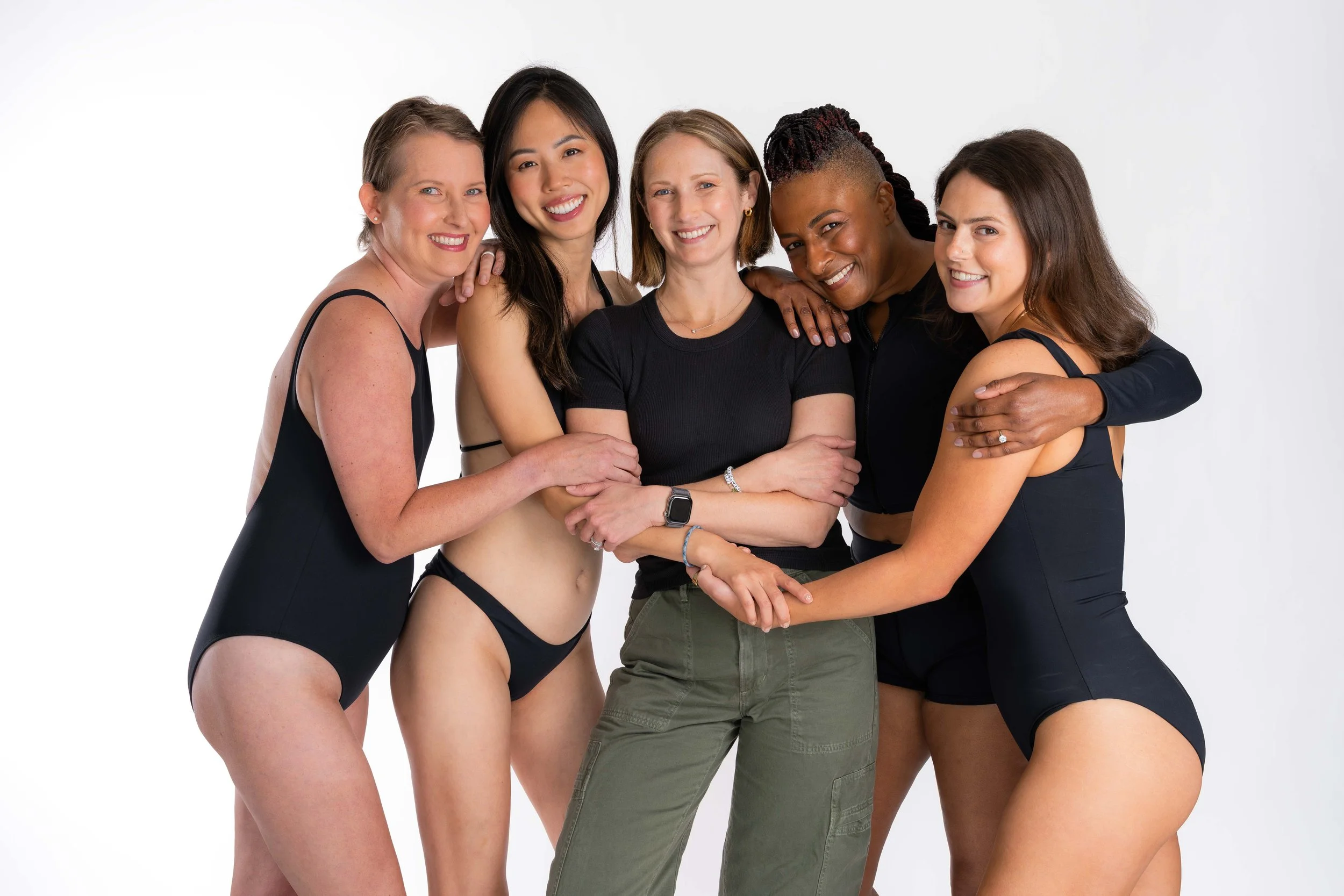
Photo: Jessica Freund | Moonstone Media & Design
After a mastectomy, a swimsuit can feel like one more thing your body has to get through. In this guide, breast cancer survivor and POST SWIM founder Lauren Yerkes shares what to look for in swimwear after surgery, whether you go flat, reconstruct or wear a prosthesis, and why the choice of how much to cover is yours.
I'm Lauren, a triple negative breast cancer survivor, I carry the BRCA2 gene mutation, and I spent twenty years in fashion before I ever had to shop for a swimsuit after a double mastectomy. You'd think all that experience would have made it easy, unfortunately it didn't.
Nothing felt like it was made for my body anymore. And the options that existed for women after breast cancer felt medical, like something you'd pick up at a pharmacy, not something you'd actually want to wear.
That's why I started POST SWIM. But this post isn't about my brand, it’s about helping you figure out what to look for, no matter what you chose (or didn’t get to choose) for your body. Because here's what I've learned from talking to so many women in this community: there's no one right answer after a mastectomy, and there shouldn't be one right swimsuit either.
Why Swimwear Gets Hard After a Mastectomy
Most swimsuits are built around a certain kind of chest. There are molded cups, underwire, padding and ruching, all designed to add shape or hold everything in place. After a mastectomy, that construction can work against you.
A friend of mine chose to go flat after her bilateral mastectomy. When summer came around, she couldn't find a single suit that didn't gape or pucker when she bent down, so she ended up cutting the cups out of regular swimsuits and wearing cotton sports bras from the Gap in the pool. After everything her body had been through, getting dressed for the beach became a reminder of her diagnosis instead of a fun day out.
Learning all of this changed how I think about design, and it's why I believe every woman should know what to look for before she shops.
Coverage is a choice, not a rule
Before we get into fit, I want to say this clearly: how much you show is up to you.
Some women love showing their scars. Some want full coverage over their chest, a port scar or skin that's still sensitive from treatment. Some feel one way in June and another way by August and honestly all of it is valid and personal.
The right suit doesn't decide that for you, it gives you options and lets you decide.
Swimwear for Going Flat: What to Look For
If you went flat, with or without aesthetic flat closure, the goal is a suit that sits smoothly against your chest without trying to create shape that isn't there. Here's what I'd look for:
No built-in cups or bra shelves as these are made to hold volume. On a flat chest, they tend to gape or collapse.
No ruching across the chest as gathered fabric is meant to drape over curves. Without them, it can bunch up.
A clean, smooth front. Simple construction lies flat and looks intentional.
A neckline you feel good in. A higher neckline gives more coverage, a bandeau or square neck can look modern and sleek.
Comfort along your scar line. Pay attention to where seams and elastic hit, nothing should rub or dig in.
We wrote a deeper guide on this, Flat-Friendly Swimwear: What It Is, What It Isn't, and Why It Matters, if you want to go further.

Photo: Jessica Freund | Moonstone Media & Design
Swimwear After Reconstruction: What to Look For
I chose reconstruction after my double mastectomy, so this one is personal. Reconstructed breasts can sit differently, feel different and change over time. Here's what helped me:
Coverage where you want it. Some women notice implant rippling, nipple asymmetry or scars they'd rather cover on certain days. A higher neckline or a little more fabric at the sides can make a big difference.
Gentle support, not compression. You don't need underwire and honestly my surgeons told me to avoid it. But for me I find that soft, supportive fabric and well-placed straps usually feel best.
Adjustable straps. Your body may be a little different on each side, being able to tweak the fit matters.
Fabric that moves with you. You should be able to lift your arms, swim and chase your kids without adjusting every five minutes.
Swimwear With a Prosthesis: What to Look For
If you wear a breast prosthesis, sometimes or all the time, you want a suit that holds it securely and still looks like a normal swimsuit. Look for:
Pockets or a lining that holds a form in place. It shouldn't shift when you dive in or lean over.
Enough coverage at the neckline and sides so the form stays put and out of sight.
A suit that works both ways. Some styles hold a prosthesis and also sit well on a flat chest, which is great if you go back and forth.
It's also worth asking your prosthesis fitter whether a form made for swimming makes sense for you. If you want to see what this looks like in practice, here's our guide to swimsuits designed to hold a prosthesis.
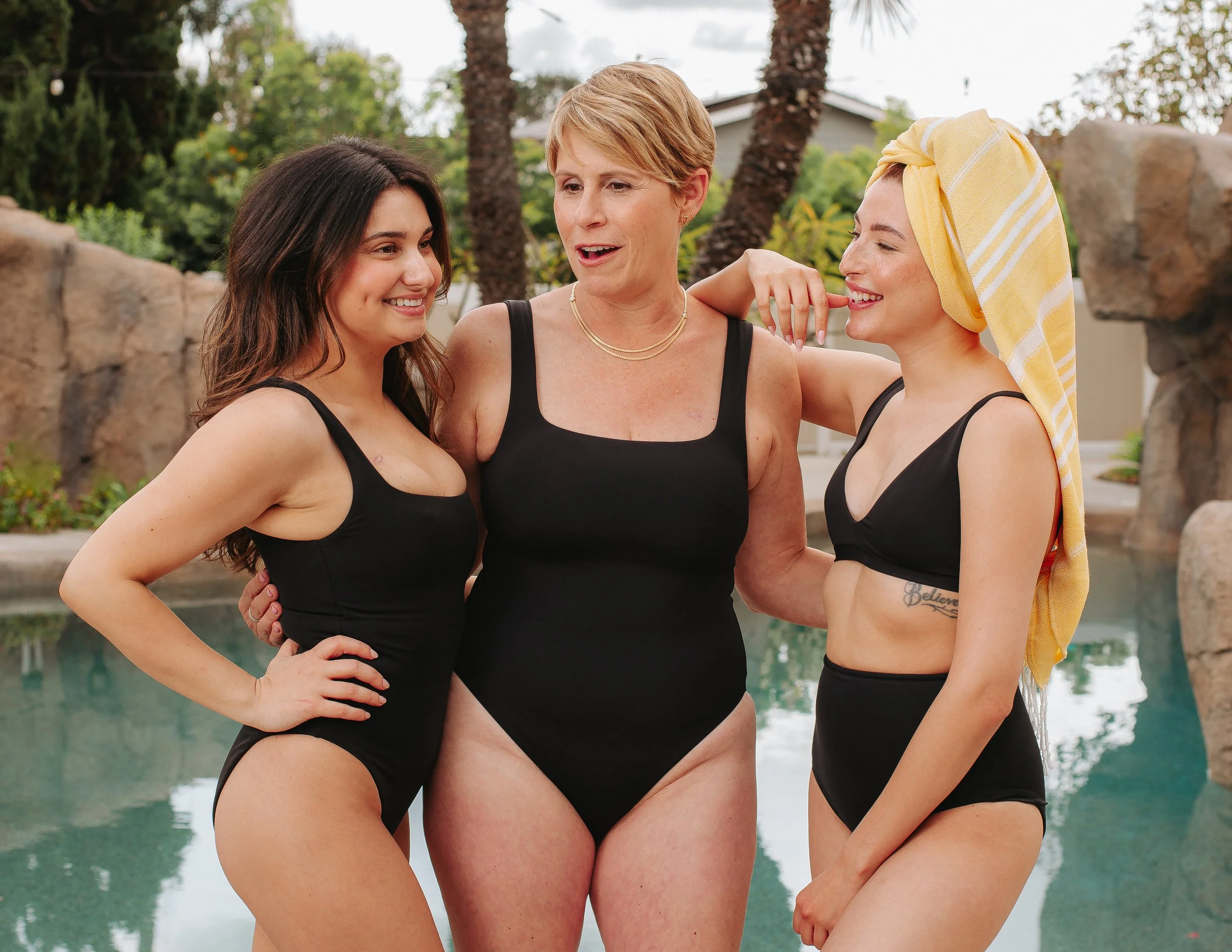
Photo: Jessica Freund | Moonstone Media & Design
Practical Things Nobody Tells You
A few things I wish someone had told me sooner:
Front zippers are a gift if your arm mobility is limited after surgery.
Size can be different now. Your measurements may have changed, and so can how a brand fits. Read the fit notes on every style.
Try it on and move. Sit, squat, reach overhead. If it only works standing still, it’s probably not going to work in the water.
Give yourself time. Your body is still changing after surgery. What feels right six months out might not be what felt right at six weeks.
For a closer look at specific styles made for women who go flat, we put together Swimwear for Flatties: A Guide by POST SWIM.
Taking Care of Your Body, Before and After
One of the reasons I love Keep A Breast is that they talk to young women about breast health before a diagnosis ever happens. More and more younger women are being diagnosed, and knowing your body is where it starts.
For me, knowing my body also meant knowing my genetics. I carry the BRCA2 gene mutation, which raises the risk of breast cancer. If breast cancer runs in your family, ask your doctor whether genetic counseling or testing makes sense for you. The National Cancer Institute's BRCA fact sheet is a good place to start.
If you haven't already, download the free Keep A Breast App for monthly reminders and a guide to checking yourself. And if you've already been through surgery, keep checking in with your body and your care team. Knowing what's normal for you matters just as much after.
You Get to Decide What Feels Like You
Whether you're flat, reconstructed, wearing a prosthesis or still figuring it out, you deserve a swimsuit that feels like you. Not a medical device, and not a compromise.
Take your time, try things on and ignore anyone who tells you there's a right way to look after breast cancer because there isn’t! It’s up to you, and it’s personal.
Xo, Lauren
About Lauren
Lauren Yerkes is a triple negative breast cancer survivor and the co-founder and CEO of POST SWIM, swimwear made for women after breast cancer, by a survivor. After twenty years in fashion, including as Chief Merchandising Officer at REVOLVE, she started POST SWIM to give women thoughtful coverage options that feel like fashion first. Follow along at @postswimofficial and @lauren_yerkes.
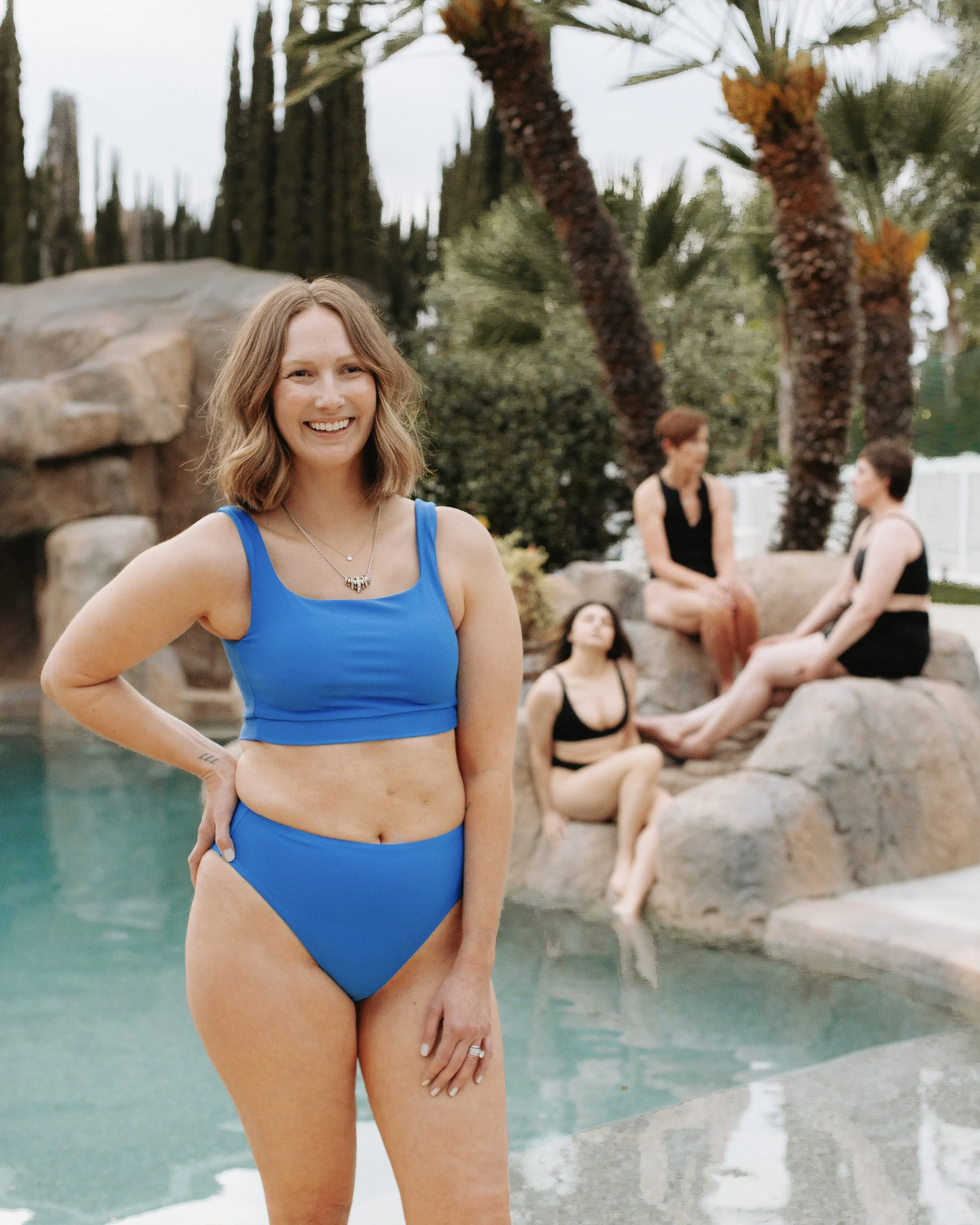
Photo: Jessica Freund | Moonstone Media & Design